




Behada (Bibhitaki): Uses, Benefits, Side Effects & More!
By Dr Siddharth Gupta +2 more

Medically reviewed by Dr Siddharth Gupta
Last updated: May 22, 2026 Published on: Mar 22, 2022


Get,

to manage your symptom
Get your,

4 Cr+ families
benefitted

OTP sent to 9988776655



You’ve successfully subscribed to receive
doctor-approved tips on
Whatsapp

Get ready to feel your best.


Register to Avail the Offer
Send OTPBy continuing, you agree with our Privacy Policy and Terms and Conditions
Hi There,
Sign up on PharmEasy now!!


Trusted by 4 crore+ families

OTP sent to 9988776655
You have unlocked 25% off on medicines


Code: NU25

By Dr Siddharth Gupta +2 more
Table of Contents
Terminalia bellirica is found throughout the Indian subcontinent, including Pakistan, Bangladesh, Sri Lanka, Nepal and Southeast Asia. In India, it is commonly known as “Bahera” in Hindi, “Beleric Myrobalan” and “Bibhitaki” in English and Sanskrit, respectively1.
As the leaves are arranged at the tips of the stems, the genus Terminalia takes its name from the Latin word “terminus.” It is a huge deciduous tree with a buttressed trunk and thick brownish-grey bark with shallow longitudinal fissures that grows to be 20-30 metres tall when fully grown. The leaves are found at the tips of the branches and have entire margins, a rounded tip, and a prominent midrib. They are pubescent when young and glabrous as they mature1. Young leaves are copper-red, turning parrot green and eventually dark green as they grow2.
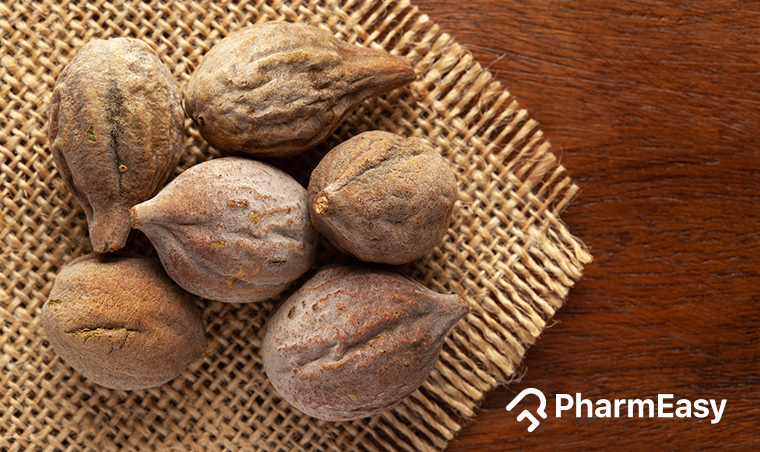
The flowers are a pale greenish-yellow colour and have an unpleasant odour1. The fruits are ovoid drupes that are round and pink in colour, turning greyish when dry. Each fruit has an ellipsoid seed in it. The bark is grey or pale brown with shallow cracks and longitudinal fissures1.
Phytochemical analysis of behada fruit extracts revealed the presence of a broad range of bioactive constituents, including flavonoids, phenolic compounds, tannins, terpenes, and glycoside derivatives. The fruit is a significant source of gallic acid and its esters, tannin and pseudo tannins, ellagitannins, chebulic, chebulagic, chebulinic and non-chebulic acid, corilagin, ellagic acid and its glycosides, triterpenes and triterpenoidal glycosides. The dried fruits of three plant species native to the Indian subcontinent, P. emblica, T. chebula, and T. bellirica, make up “Triphala,” a well-known natural formulation in Ayurvedic medicine1.
The nutritional content fount in behada/100 gm is:
Nutrients found in Behada3
Various parts of behada plant have therapeutic properties are listed below1.
The antiulcer activity of the extract of behada fruits was investigated in animal models by determining the ulcer index. In a study, the behada extract exhibited significant inhibition of stomach ulcers, decreased free acidity, total acidity, gastric volume, protein and pepsin content while increasing the mucus content, altogether lowering the ulcer index2.
Inhibition of cytoprotective prostaglandin synthesis may suppress ulcers, however the antioxidant activities of fruit extract are responsible for its antiulcer efficacy1.

In animal models of depression, the behada fruit extract demonstrated antidepressant efficacy, as it drastically reduced the mobility time. The presence of tannic acid and polyphenols in the extracts may be responsible for the antidepressant action1.
Several animal models of psychosis in Wistar rats were used to investigate the antipsychotic activity of behada fruit powder. The results showed that behada fruit powder reduced stereotyped behaviour (doing the same thing repeatedly) in rats and dopamine levels in the brain1.

In animal studies1, the diuretic efficacy of Behada fruit extract has been studied. The extract boosted salt excretion in urine, which benefits current diuretics. The anti-urolithiatic activity of behada fruit extract was investigated in animal studies. The therapy with behada fruit extract significantly reduced calcium, oxalate, and phosphate excretion, which is beneficial in reducing stone formation.

Behada fruit extract has shown antifertility and antiandrogenic properties in animal studies1. The male reproductive organs such as testis, epididymis, vas deferens, seminal vesicle, and ventral prostate significantly reduced after the administration of fruit extracts. Furthermore, extract administration significantly reduced sperm motility and density. The activity of behada fruit extract is thought to be due to selective androgen deficiency in the epididymis, which affects sperm motility and metabolism1.

The anti-obesity activity of behada fruit extract was studied in obesity models in animals. According to the findings1, behada fruit extract can prevent obesity in diabetic mice by lowering body weight, fat deposition, insulin resistance, and lowering plasma and hepatic lipid levels.
Another animal study looked at the effects of behada fruit extract on a diet-induced obesity, looking at changes in body weight, feed and water consumption, body temperature, body-mass index, organ weight, and lipid profile. The findings of the study indicated that oral administration of extract considerably improved the above parameters1.

Studies have investigated the wound healing efficacy of behada fruit extract. The extract paste was used and improved fibroblast function, glycosaminoglycan synthesis, and collagen deposition, all of which are necessary for wound healing1.

The behada fruit extract exhibited anti-inflammatory action in animal studies. The investigators suggested that inhibition of cyclooxygenase enzyme by fruit extract could be a possible mechanism behind its anti-inflammatory activity1.
The inhibitory effects of ellagic acid and gallic acid from behada were investigated on animals. The inhibition of numerous proinflammatory molecules, enzymes, and cytokines by downregulation of multiple signalling pathways might be responsible for the inflammatory response1.

The antibacterial properties of behada fruit extracts were tested on several human microbial pathogens, including Escherichia coli, Streptococcus pneumonia, Staphylococcus aureus, Salmonella typhi, S. typhimurium, Pseudomonas aeruginosa, Yersinia enterocolitica, and Candida albicans1. S. aureus was inhibited most effectively the fruit extracts. Except for E. coli and P. aeruginosa, all pathogens were susceptible to the behada fruit extract2.
The antiviral effectiveness of behada leaf extracts was tested against the human immunodeficiency virus (HIV) via cell lines assay. Extracts of behada leaf showed weak anti-human immunodeficiency virus-1 activity1.

The immunomodulatory action of behada extracts is apparent owing to the influence on T and B cell proliferation affecting cellular mediated immunity2.

The antidiarrhoeal effect of behada fruit extracts was investigated in animal models. Prostaglandins E2 caused fluid accumulation in the intestinal lumen due to sodium, chloride, and glucose absorption inhibition. The administration of behada extract reduced the incidence of diarrhoea.
Behada extract delayed defecation time in the animals as well. The behada extracts were found to inhibit the synthesis of prostaglandins E2, ricinoleic acid, and nitric oxide resulting in the prevention of diarrhoea1.

Researchers examined the liver-protective effects of behada fruit extract and its active ingredient, gallic acid, in lab animals. Biochemical parameters such as serum enzymes, lipid peroxidase, and glutathione demonstrated improvement2.

Investigators have studied behada fruit extracts for their anti-diabetic properties. With the restoration of body weight and total serum protein, the fruit extract significantly enhanced plasma insulin, C-peptide, and glucose tolerance levels. All biochemical markers, including total cholesterol, triglycerides, urea, uric acid, and creatinine, showed improvement, preventing diabetic kidney complications and dyslipidemia1.
The behada fruit extract exhibits antioxidant activity due to presence of enzymatic and non-enzymatic antioxidants. It can be potent against infections and several diseases. The antioxidant activity of behada extract fractions was demonstrated by scavenging free radicals that cause cellular damage2.

The behada crude extract was studied in animals to evaluate bronchoconstriction. It produced bronchial smooth muscle relaxation in animal trachea and thus might be helpful in lung airway diseases in humans1.
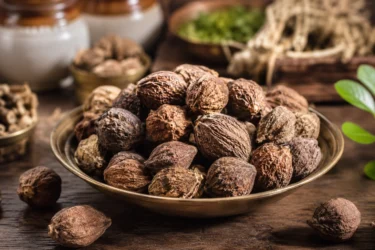
In an in-vitro model, the clot-lysing action of behada fruit extract was investigated. The study found that behada fruit extracts slowed the formation of blood clots1.

The behada fruit extract has exhibited antiproliferative action in several cancer cell lines with a high degree of selectivity1.
Skin, tongue, and pharyngeal carcinoma cell lines were used to assess the anticancer activities of behada seed extract and gallic acid. Apoptotic characteristics such as cell shrinkage, loss of cytoskeletal integrity, and DNA fragmentation were exacerbated in cell lines treated with seed extract1.
In my experience, I have come across studies2 suggesting that extracts from Terminalia bellirica fruits may possess antipyretic properties. This means that they might help reduce elevated body temperature associated with fever.
Dr. Rajeev Singh, BAMS
Over the years, I have come across studies2 suggesting that Behada, a medicinal plant, may have certain beneficial effects. Specifically, it is believed to have both antisecretory and antinociceptive properties. This means that it might help reduce excessive secretion and alleviate pain sensations.
Dr. Siddharth Gupta, B.A.M.S, M.D (Ayu)
The safety studies of behada on pregnant and breastfeeding women have not been conducted. Therefore, it should only be taken under the supervision and advice of a physician. No research has been done on the safety of behada in children.
There is not much information on how behada interacts with other medications. Hence, patients should consult a doctor before taking behada if they take any other drug or supplement.
Also Read: Suhaga: Uses, Benefits, Precautions & More!
Behada (Terminalia bellirica) is a potent Ayurvedic herb with an impressive range of therapeutic properties, spanning anti-inflammatory, antioxidant, antimicrobial, antidiabetic, and hepatoprotective benefits. Its applications extend from managing ulcers, diarrhoea, and obesity to supporting kidney health, wound healing, and even showing anticancer potential. As a key ingredient in the classical formulation Triphala, its medicinal significance is well-established in traditional medicine. However, most evidence remains confined to animal and in vitro studies, and human clinical data is still limited. Medical supervision is essential, particularly for pregnant women, children, and those on other medications.
Also Read: Vasavaleha: Benefits, Uses, Side Effects, Precautions & More!
It is a huge deciduous tree that grows to be 20-30 metres tall when fully grown1.
Tannin, pseudo-tannins, gallic acid, chebulic, chebulagic, chebulinic acids, non-chebulic acid, ellagitannins, corilagin, ellagic acid, triterpenes and triterpenoidal glycosides are among the compounds found in behada1.
Bahera, beleric myrobalan, and bibhitaki are the common names of behada1.
Behada fruit is used to treat asthma, bronchitis, hepatitis, diarrhoea, piles, dyspepsia, eye diseases, hoarseness of voice, scorpion-sting, hair tonic and menstrual disorders1.
Yes, behada is good for diabetes. The behada fruit extract anti-diabetic properties were tested in animal models. The extract restored body weight and total protein levels while increasing plasma insulin, C-peptide, and glucose tolerance1. Studies for efficacy in humans are lacking.
Yes, behada is good for the liver. Treatment of animals with behada fruit extract and gallic acid improved biochemical indicators such as serum enzymes, lipid peroxidase, and glutathione, indicating liver protection2.
Yes, behada is good for preventing kidney stones. The behada fruit extract prevented kidney stones in animal models by reducing oxalate, calcium, and phosphate excretion, which is beneficial in reducing stone formation1. However, studies are needed for efficacy in humans.
Disclaimer: The information provided here is for educational/awareness purposes only and is not intended to be a substitute for medical treatment by a healthcare professional and should not be relied upon to diagnose or treat any medical condition. The reader should consult a registered medical practitioner to determine the appropriateness of the information and before consuming any medication. PharmEasy does not provide any guarantee or warranty (express or implied) regarding the accuracy, adequacy, completeness, legality, reliability or usefulness of the information; and disclaims any liability arising thereof.
Links and product recommendations in the information provided here are advertisements of third-party products available on the website. PharmEasy does not make any representation on the accuracy or suitability of such products/services. Advertisements do not influence the editorial decisions or content. The information in this blog is subject to change without notice. The authors and administrators reserve the right to modify, add, or remove content without notification. It is your responsibility to review this disclaimer regularly for any changes.
 3
3  1
1Comments

Leave your comment...
You may also like





















Comments